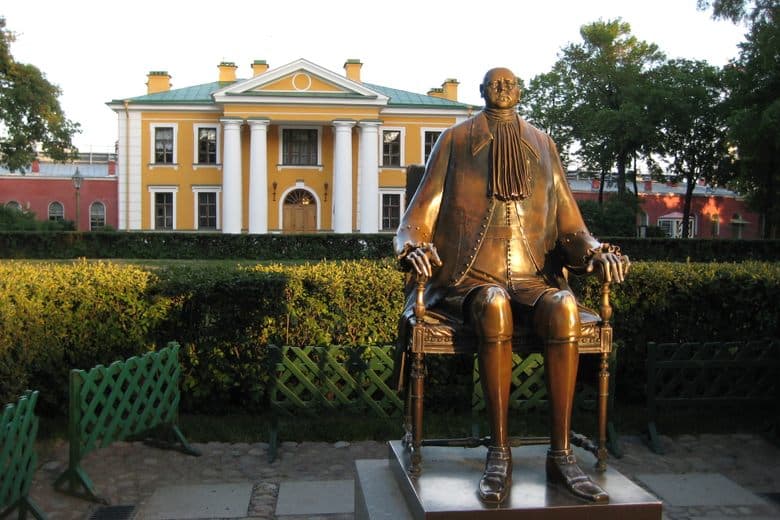
The Monument to Peter I, created by sculptor Mikhail Chemiakin, is a striking and unconventional depiction of the city's founder, Peter the Great. Installed in 1991 within the historic Peter and Paul Fortress, this bronze statue stands out due to its unusual proportions, particularly the small head atop an elongated body. While initially met with strong criticism from locals, it has since become a notable, albeit controversial, landmark, offering a modern artistic interpretation of a historical figure.
Visitors consistently highlight the statue's peculiar appearance, often finding it amusing or thought-provoking. The head, though small, is remarkably lifelike, having been modeled after a 1719 life mask of Peter I. The body's exaggerated length is said to be inspired by traditional Russian icons. Many reviewers appreciate the statue's unique artistic vision, seeing it as a bold departure from conventional historical monuments. However, some still find its grotesque nature off-putting, reflecting the initial public outcry.
To fully appreciate the monument, visitors should allocate about 10-15 minutes, as it is a relatively small installation. It is best viewed as part of a larger visit to the Peter and Paul Fortress, which offers numerous other historical attractions. There are no specific items to bring for viewing the statue itself, but comfortable walking shoes are recommended for exploring the fortress grounds. The monument is accessible during the fortress's operating hours, and visiting during daylight hours allows for better viewing and photography.
The Monument to Peter I is located within the Peter and Paul Fortress, which is easily accessible by public transport. The nearest metro station is Gorkovskaya (Горьковская) on the Moskovsko-Petrogradskaya line (Line 2). From Gorkovskaya, it is approximately a 10-15 minute walk across Ioannovsky Bridge to the fortress entrance. Buses and trams also serve the area around the fortress. Driving is generally not recommended due to limited parking and city traffic; public transport or a taxi are more convenient options.
The primary 'complaint' about the monument often revolves around its aesthetic, which some find unsettling or even ugly. To mitigate this, approach the statue with an open mind, understanding its artistic intent and historical context. Reading about Chemiakin's inspiration beforehand can enhance appreciation for this unconventional piece.