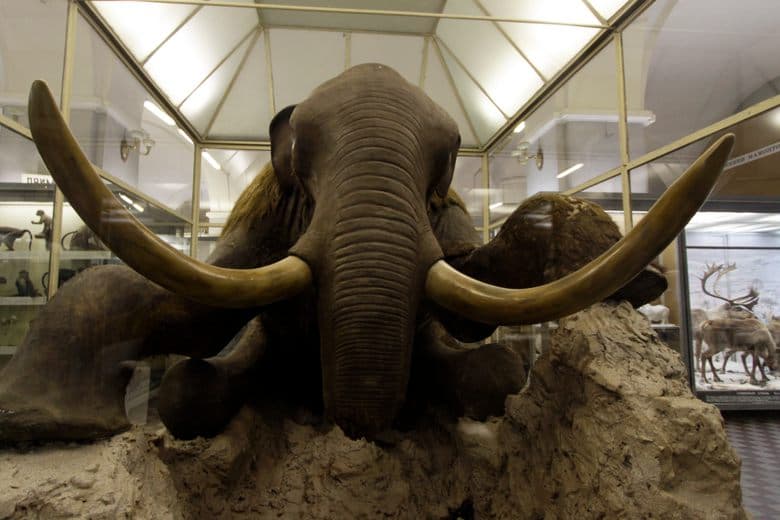
The Berezovsky Mammoth is a star attraction within the Zoological Museum of the Russian Academy of Sciences in Saint Petersburg. Discovered in 1900 near the Berezovka River, this male woolly mammoth specimen is approximately 44,000 years old and is renowned for its exceptional preservation, having been encased in permafrost. It offers a tangible connection to the prehistoric world and is a cornerstone of paleontological study.
Visitors consistently praise the incredible state of preservation of the mammoth, noting the visible fur and even some internal organs that were intact upon discovery. The display in a large glass casket allows for close observation from multiple angles. Many reviewers highlight the educational value, especially for families with children, as the museum also features other mammoth and ancient elephant skeletons, providing a comprehensive overview of these extinct giants.
To fully appreciate the Berezovsky Mammoth and the wider collection, visitors should allocate at least two hours for their visit. The museum itself is quite large, so comfortable shoes are advisable. It is best to visit during off-peak hours, such as weekday mornings, to avoid crowds and allow for a more contemplative experience. There are no specific items to bring beyond standard museum etiquette, such as refraining from flash photography.
The Zoological Museum is centrally located in Saint Petersburg, making it easily accessible. It is situated on Universitetskaya Embankment, on Vasilyevsky Island. The nearest metro station is Vasileostrovskaya (Василеостровская), which is about a 15-20 minute walk away. Alternatively, numerous bus and tram lines serve the area, with stops conveniently located near the museum entrance. Taxis and ride-sharing services are also readily available for direct access.
A common complaint among some visitors is the sheer size of the museum, which can be overwhelming if one attempts to see everything. To mitigate this, focus your visit on the main exhibits of interest, such as the Berezovsky Mammoth and the hall of ancient elephants, rather than trying to rush through every section.