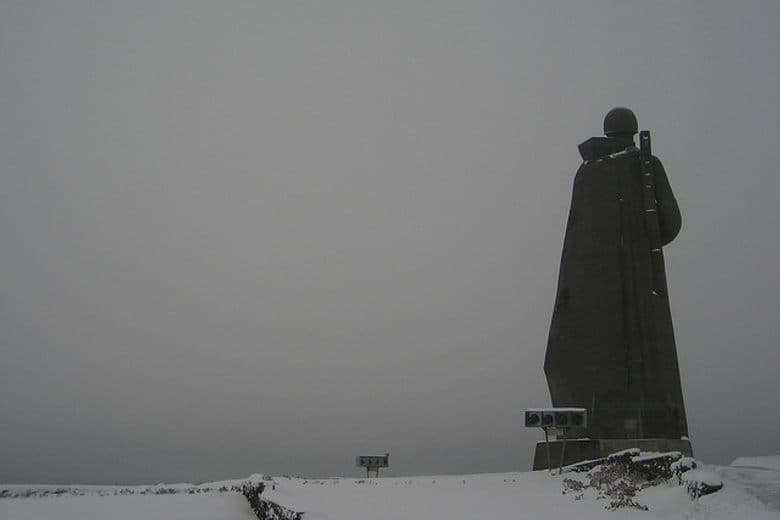
The Alyosha Statue, formally titled the Monument to the Defenders of the Soviet Arctic during the Great Patriotic War, stands as a powerful symbol of Murmansk's resilience and its crucial role in World War II. Erected in 1974, this colossal 116-foot tall, 5,000-ton figure commemorates the Soviet soldiers who defended the Arctic against Nazi invaders, marking a turning point in Hitler's northern campaign. As the second-highest statue in Russia, it dominates the Murmansk skyline and serves as a poignant reminder of the city's 'hero city' status.
Visitors consistently praise the monument's impressive scale and the panoramic views it offers. Many reviewers highlight the emotional impact of the eternal flame and the solemn atmosphere, making it a place for reflection. The site is particularly popular for its photo opportunities, especially at sunset or during the polar night, when the city lights twinkle below. Reviewers often recommend combining a visit here with other nearby historical sites to fully appreciate Murmansk's wartime significance.
To make the most of your visit, allocate about 1–2 hours. The best time to visit is during daylight hours for clear views, or at dusk to see the city illuminated. Dress warmly, as the location is exposed to winds, especially outside of summer. There is no entry fee, making it an accessible historical experience. While there are no specific amenities directly at the monument, the surrounding area in Murmansk offers various dining and refreshment options.
The Alyosha Statue is located on a hill overlooking Murmansk. While it is possible to walk from the city center, many visitors prefer to take a taxi or use local buses to reach the monument due to the uphill climb. Public transport options include several bus routes that stop relatively close to the memorial, requiring a short walk up to the statue itself. Driving is also an option, and parking is usually available near the site.
A common complaint among some visitors is the lack of extensive interpretive signage in English. To mitigate this, consider reading up on the monument's history beforehand or using a translation app. The exposed location can also be very cold and windy, so preparing with appropriate clothing is essential to ensure a comfortable visit.